
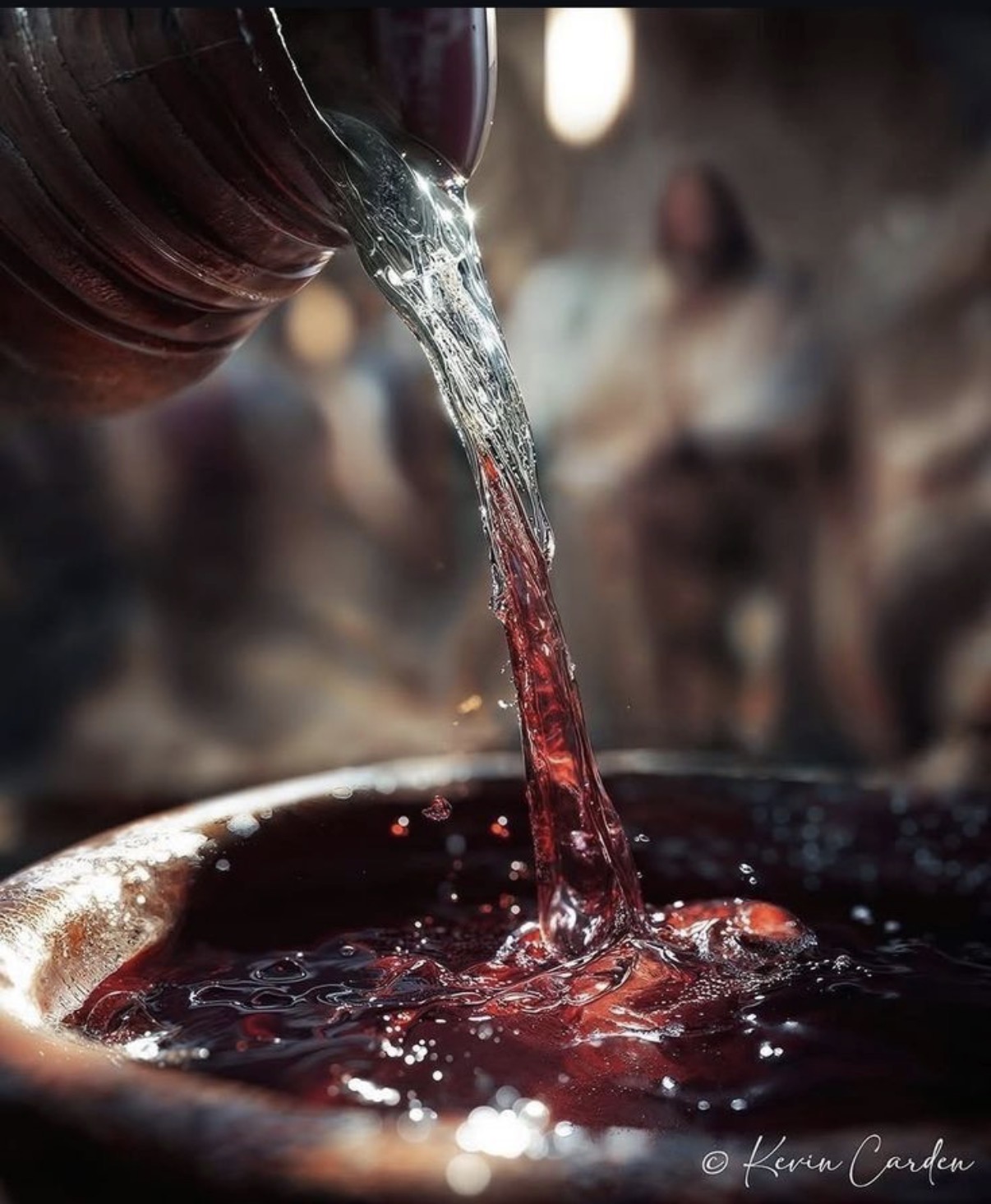
The story of the wine in Cana (John 2:1–11) carries far more historical, cultural, and spiritual weight than it appears at first glance.
It is not just a miracle — it is a revelation of how God responds when something is missing.
WHEN SOMETHING IS MISSING…
In first-century Jewish culture, a wedding was not just a ceremony. It was a community event that lasted several days. The groom’s family was responsible for providing food and drink for all the guests. Running out of wine was not a small logistical problem — it was public shame. It meant failure, social humiliation, and dishonor. Wine symbolized joy, honor, and celebration.
It is in this context that Mary comes to Jesus and says,
“They have no more wine.” (John 2:3)
She is not just talking about a drink. She is pointing to a real, concrete, social, and emotional crisis. Joy is fading. Honor is at risk. A family is being exposed to embarrassment.
The text suggests that Mary had a close connection to that family. She feels the urgency of the moment. But what stands out most is not what she feels — it is what she does.
Mary does not make a scene.
She does not shout.
She does not draw attention.
She does not try to fix it in her own strength.
She simply pulls Jesus aside and places the need in His hands.
This reveals something profound: Mary understood that it was not about her or what she could do, but about what Jesus could do. She did not seek attention. She did not try to appear spiritual. She did not try to control the outcome. She put the problem in the right hands.
In Jewish culture, intercession was not performance — it was honor. Going to someone in authority was an act of faith. And Mary recognized the spiritual authority of Jesus before any public miracle had ever taken place. John makes it clear this was His first sign. In other words, Mary believed before the world saw.
When Jesus answers, “Woman, what does this have to do with Me? My hour has not yet come,” He is not being harsh or dismissive. The word He uses is respectful. He is indicating that this moment is no longer being governed by a natural family relationship, but by the divine purpose of the Father. The relationship is being redefined — not rejected — as Mary now relates to Him not only as a son, but as the Messiah.
And Mary does not argue.
She does not insist.
She does not try to manipulate.
She simply steps out of the center of the moment and tells the servants,
“Do whatever He tells you.” (John 2:5)
Right there, she places both the desire and the outcome into Jesus’ hands. She does not control the miracle — she trusts.
That is real faith: bringing the need and then letting go of control.
And then Jesus turns water into wine — not just any wine, but the best. The master of the banquet says it himself. Jesus does not merely solve the crisis; He restores honor, joy, and dignity at a higher level than before.
What Mary did in quiet surrender, Jesus did in glory.
When something is missing in us — joy, peace, direction, provision — our instinct is often to make noise. We look for people, methods, and distractions. We try to justify ourselves or appear strong. Mary shows us another way: to bring it quietly to the feet of Jesus.
When we place what is missing in His hands, He does what only He can do.
🤍
Yona Peck



Deixe uma resposta