
Introduction
The Riddle
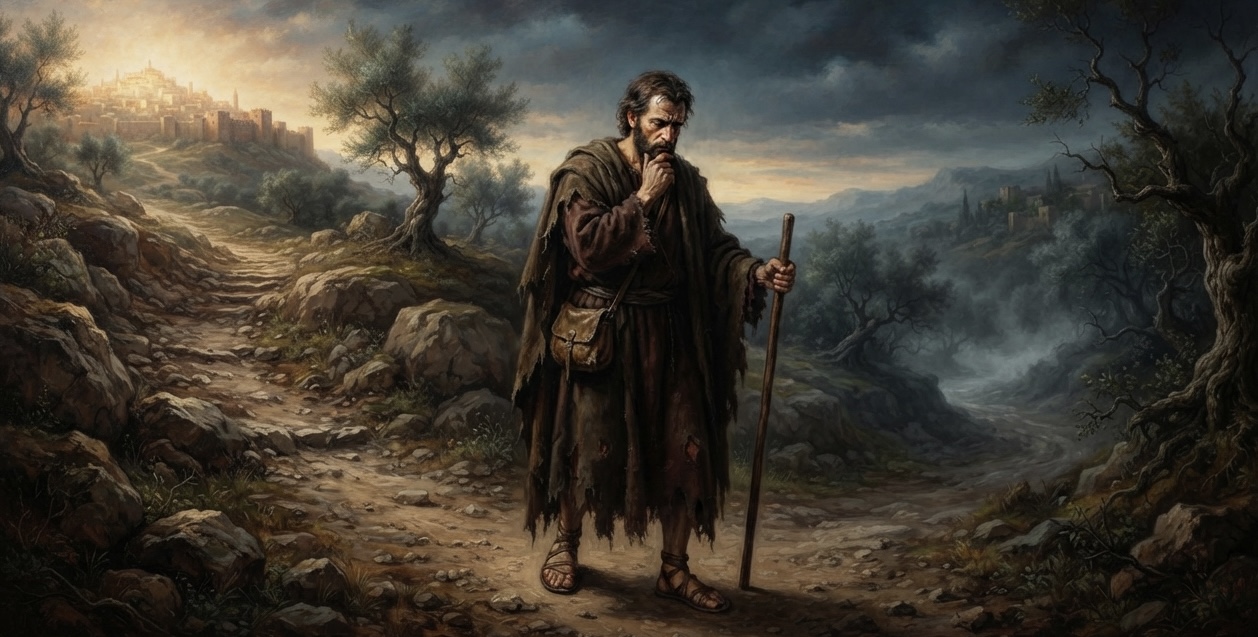
Imagine you are traveling down a road and come to a fork. One road leads to Truth Town, and the other leads to Lie Town.
There is something unusual about these two towns. Everyone who lives in Truth Town always tells the truth. Not most of the time. Not when it is convenient. Always. And everyone who lives in Lie Town always lies. Every answer they give is false.
You don’t know which town is which, and you don’t know where the person standing at the crossroads is from. They could be from Truth Town, making them a perfect truth teller, or they could be from Lie Town, making them a perfect liar.
You need to find your way to Truth Town. But there is a catch: you are allowed to make only one inquiry of the person standing at the crossroads.
What do you ask?
It’s a simple riddle, but it raises some interesting questions about truth, lies, identity, and how we come to know one another.
In real life, of course, people aren’t nearly as simple as the people in this riddle. There are no towns filled entirely with perfect truth tellers or perfect liars. We are somewhere in between. We tell the truth sometimes, fail to tell it at other times, and occasionally deceive others or even ourselves.
Yet there is something powerful about the contrast in the riddle. It gives us a picture of two radically different ways of living. One is completely oriented toward truth. The other is completely committed to deception.
And that makes us ask a deeper question:
“Show me where you are from.”
Our stories can help answer that question.
The gospel is good news that is meant to be shared. Isaiah writes:
How beautiful on the mountains are the feet of the messenger who brings good news, the good news of peace and salvation, the news that the God of Israel reigns!
Isaiah 52:7 NLT
Sharing our testimony is not merely about convincing someone else to believe what we believe. It is also about communion. When we share what God has done in our lives, we invite others into our story. When we listen to their stories, we have the opportunity to see God’s grace from a perspective we could never experience on our own.
So perhaps one way of beginning to know where someone is from is to listen to their story.
1. Truth
Truth-Telling
Truth seems simple enough. Tell the truth. Don’t lie. Scripture is remarkably direct about this.
So stop telling lies. Let us tell our neighbors the truth, for we are all parts of the same body.
Ephesians 4:25 NLT
Truth is more than simply getting our facts correct. Truthfulness is the foundation upon which integrity and trust are built. When our words consistently correspond with reality, people learn that they can rely upon us. When our actions match our words, our character becomes trustworthy.
People with integrity walk safely, but those who follow crooked paths will be exposed.
Proverbs 10:9 NLT
Integrity is what happens when truth becomes part of who we are. It means that we don’t merely tell the truth when telling the truth is convenient. We seek to live honestly even when nobody is watching. Our character is revealed by the choices we make when there is nothing to gain from being truthful.
And this brings us to identity. Who are we? Where are we from?
As Christians, our deepest identity is not found in our careers, accomplishments, possessions, political affiliations, failures, successes, or even our past. Our identity is in Christ. We belong to Him. We are called to become more like Him.
Jesus said, “I am the way, the truth, and the life.” (John 14:6 NLT) Truth is not merely an idea that Jesus taught. Truth is part of who Jesus is.
That makes our pursuit of truth a matter of discipleship. When we tell the truth, live with integrity, and allow our words and actions to align with Christ, we are showing others something about where we are from.
“Show me where you are from.”
The King of Truth
There is an important distinction, however. We are not Jesus.
The riddle imagines a world divided neatly between people who always tell the truth and people who always lie. Real life is not so simple. Human beings are not perfectly consistent. We can be honest in one moment and deceptive in another. We can tell the truth with kindness, or use the truth as a weapon. We can lie intentionally, exaggerate unintentionally, or simply convince ourselves that something is true because it is what we want to believe.
Jesus, however, is perfectly true.
Our trust in God ultimately rests not on our ability to understand everything, but on His character.
Trust in the Lord with all your heart; do not depend on your own understanding. Seek his will in all you do, and he will show you which path to take.
Proverbs 3:5–6 NLT
We can trust God because He is trustworthy.
And as we become more like Christ, our lives should increasingly reflect that same character. We may never become perfect truth-tellers in this life, but our direction matters. We should increasingly look like the One we claim to follow.
“Show me where you are from.”
2. Lies
The Road of Deception
If truth builds trust, lies destroy it.
A lie rarely stays by itself. One lie often requires another lie to protect it, and then another to protect that one. Before long, a person is no longer simply telling a lie. They are maintaining an entire story that has been constructed to hide the truth.
Imagine telling a friend, “I can’t come to your party because I have an appointment.” Later, they happen to see you at the mall. Now the first lie needs an explanation. “Oh, yes, I do have an appointment. It’s at the salon.” Suddenly you have created a second lie. If they ask another question, you need a third.
This is what deception does. It creates a world that has to be continually maintained.
Scripture warns us about this destructive path:
Truthful words stand the test of time, but lies are soon exposed.
Proverbs 12:19 NLT
Jesus gives us the spiritual source of this contrast when He describes the devil as “a liar and the father of lies.” (John 8:44 NLT) Satan’s work is fundamentally deceptive. He distorts what is true about God, about ourselves, and about the world around us.
That is why lying is not merely a social problem. It is a spiritual problem. What we say and how we live reveal something about the kingdom with which we are aligning ourselves.
“Show me where you are from.”
Truth Without Love
But there is a danger in the other direction.
Being truthful does not give us permission to be cruel.
We can use technically accurate words to hurt someone. We can insist, “But I’m just being honest,” when what we really mean is, “I want to say whatever I want without caring about your heart.”
Paul gives us a better standard: “speak the truth in love.” (Ephesians 4:15 NLT)
Consider something as ordinary as a spouse asking, “Do you like my hair?” or “What do you think of this outfit?” The answer does not have to become a brutal assessment of personal preferences in the name of honesty. There are times when the most loving response is to recognize that the question is really about something deeper: connection, encouragement, affection, or reassurance.
That doesn’t mean we should lie. It means we should understand that truth and love are not enemies.
Sometimes truth needs to be spoken gently. Sometimes we need to recognize that our personal preference is not an objective truth. Sometimes the kindest thing we can do is put another person’s needs ahead of our own preferences.
The goal is not to become someone who says everything that comes into their mind. The goal is to become someone whose words are trustworthy, gracious, and loving.
There is a difference between hiding the truth and exercising wisdom in how we communicate it.
And perhaps that is another reason the simple categories of Truth Town and Lie Town don’t quite describe us. We are complicated people. We fail. We grow. We sometimes tell the truth poorly, and sometimes we tell lies we wish we hadn’t told.
Yet even in our imperfection, our stories can point somewhere.
“Show me where you are from.”
3. Testimony
This is where the riddle becomes something more than a puzzle.
If you really want to know where someone is from, ask them to show you.
Tell me your story.
What was your life like before you encountered Jesus? What happened that changed you? What is different now?
This is the basic shape of a testimony. Before. Turning point. After.
Paul repeatedly used his own story this way. He talked about who he had been, what happened when he encountered Christ, and how that encounter changed the direction of his life. His testimony wasn’t a claim that he had always been perfect. Quite the opposite. His story demonstrated the power of God’s grace to transform an imperfect person.
Jesus Himself told a man who had experienced dramatic healing, “go home to your family, and tell them everything the Lord has done for you and how merciful he has been” (Mark 5:19 NLT)
That is the heart of testimony.
Not, “Look how good I am.”
Not, “Look at all the terrible things I used to do.”
But, “Look what God has done.”
Our testimony is not ultimately about making ourselves the hero of the story. God is the hero.
“Show me where you are from.”
Telling Our Stories
We don’t need impressive words or a dramatic conversion story to have a testimony. We simply need to tell the truth about what God has done.
Peter tells believers to always be prepared to give a reason for the hope that is in them, but he adds an important qualification: “but do this in a gentle and respectful way.” (1 Peter 3:16 NLT)
That means our testimony should be authentic and humble. We don’t need to exaggerate our past, embellish God’s work, or make our story more dramatic than it really was. We can simply tell the truth.
And sometimes our testimony is about something very ordinary.
Maybe God gave you strength to endure a difficult season. Maybe He answered a prayer. Maybe He provided when you didn’t know how you would make it through. Maybe He changed your heart toward someone you struggled to love. Maybe you wandered away and He brought you back.
Whatever the story, tell it.
Let the redeemed of the Lord say so.
Psalm 107:2 ESV
When we tell our stories honestly, we are showing people where we are from.
“Show me where you are from.”
Receiving Someone Else’s Story
But testimony is not only about speaking. It is also about listening.
James gives us a simple instruction: “You must all be quick to listen, slow to speak, and slow to get angry.” (James 1:19 NLT)
When someone shares their story, our first responsibility is not to formulate our response. It is to listen.
We don’t need to interrupt with our own similar experience. We don’t need to immediately give advice. We don’t need to judge the person for decisions they made before they knew what they know now.
We can listen.
We can rejoice with them. We can weep with them. We can carry their burdens. We can thank God for what He has done.
Sometimes hearing another person’s testimony will encourage us. Sometimes it will challenge us. Sometimes it will remind us of something we had forgotten. Sometimes God will use someone else’s story to reveal something in our own.
John describes the purpose of Christian testimony beautifully:
We proclaim to you what we ourselves have actually seen and heard so that you may have fellowship with us.
1 John 1:3 NLT
That is the deeper power of sharing our stories.
Testimony creates fellowship.
When you tell me where you are from, I have an opportunity to know you. When I tell you where I am from, you have an opportunity to know me. And when both of us are willing to be honest about our failures, our questions, our victories, our struggles, and God’s faithfulness, something happens that goes beyond simply exchanging information.
We meet one another.
And hopefully, as Christians, our stories ultimately point beyond ourselves to Jesus.
Perhaps this is the question we should be willing to ask one another, not simply, “What do you believe?” but, in effect, “Show me where you are from.”
Conclusion
The Answer
Now let’s return to the riddle.
There are two towns: Truth Town and Lie Town. Everyone from Truth Town always tells the truth. Everyone from Lie Town always lies.
You arrive at a fork in the road. One road leads to Truth Town. The other leads to Lie Town. A person is standing at the intersection, but you don’t know which town they are from.
You are allowed to make one inquiry.
You need to find your way to Truth Town.
What do you ask?
The answer is simple:
“Show me where you are from.”
If they are from Truth Town, they will show you the way to Truth Town.
If they are from Lie Town, they will lie about where they are from and still show you the way to Truth Town.
Either way, you find the truth.
And perhaps that simple riddle gives us a beautiful picture of what testimony can do.
We cannot look at another person and immediately know everything about their heart. We don’t know all of their history, all of their struggles, all of their failures, or all of the ways God has worked in their life.
But we can listen.
We can invite them to show us where they are from.
And we can do the same.
Not by pretending that we are perfect truth tellers. Not by hiding the places where we have failed. Not by making ourselves the hero of our story.
Instead, we can honestly tell the story of where we have been, where God met us, and where He is leading us now.
We are not perfect residents of Truth Town. We are imperfect people who are learning to follow the One who is.
Jesus is the way. Jesus is the truth. Jesus is the life.
So let us tell the truth. Let us reject deception. Let us speak truth in love. Let us live with integrity. Let us trust the One who is completely trustworthy.
And let us tell our stories.
When someone asks where you are from, don’t simply give them an answer.
Show them.
Tell them what God has done.
Let your life point toward Truth Town.
“Show me where you are from.”




Deixe uma resposta